How Leaders Are Competing in Model Development and Innovation
AI Arms Race Strategies: How Leaders Are Competing in Model Development and Innovation
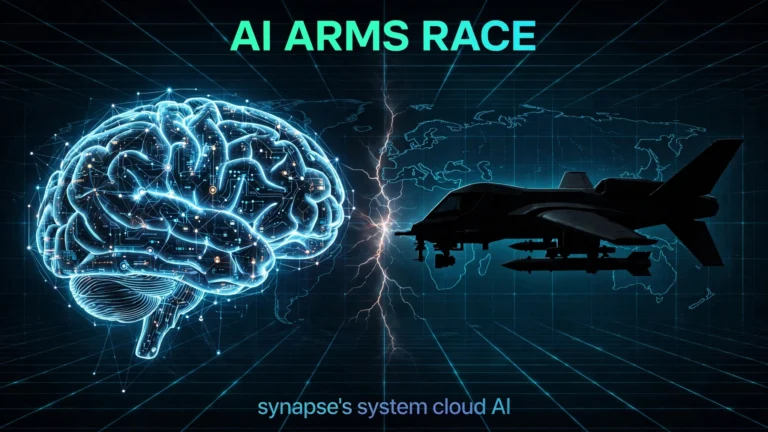
The headlines are dominated by announcements of increasingly powerful AI models. ChatGPT, Gemini, Claude, Llama – the pace of innovation feels relentless. This is the reality of the AI Arms Race, a high-intensity competition where leaders are employing diverse and sophisticated strategies to gain an edge. Understanding these strategies provides insight into the current landscape and the trajectory of AI development.
Common Tactics in the AI Arms Race:
While each company’s approach is unique, several recurring strategies emerge:
- Massive Scale and Compute: Investing in colossal data centers and vast amounts of computational power (GPUs/TPUs) allows companies to train enormous models. Think of the sheer scale required for models like GPT-4 or Gemini Ultra. More compute often translates to potentially better performance.
- Data Acquisition and Curation: Securing access to diverse, high-quality, and often proprietary datasets is crucial. Companies invest heavily in data collection, annotation, and fine-tuning using domain-specific data to achieve superior performance in particular tasks.
- Open Source vs. Closed Development: Some players, like OpenAI (to some extent) and Meta (with Llama), embrace open source to build community, gain feedback, and signal intent, while others maintain strict secrecy around their most advanced models (e.g., Google’s “secret AI team”). Each approach has pros and cons in terms of speed, security, and innovation diffusion.
- Specialization: Instead of aiming for generalist behemoths, some companies focus on excelling in specific domains. Examples include Anthropic’s focus on AI safety features, OpenAI’s exploration of multimodal capabilities, or DeepSeek’s emphasis on Chinese-language understanding. Specialization can be a powerful differentiator.
- Speed and Iteration: Leveraging large teams, automated tools, and continuous integration/continuous deployment (CI/CD) pipelines allows for rapid experimentation and frequent model updates. Being able to iterate faster than competitors is a key advantage.
- Acquisition and Talent: Acquiring promising startups and talented AI researchers is a direct way to gain capabilities and intellectual property. The competition for top talent is fierce.
- Strategic Partnerships & APIs: Offering powerful AI capabilities via APIs (like Anthropic’s API) creates new revenue streams and fosters wider adoption, while partnerships can accelerate development or access complementary expertise.
Innovating Beyond Just Scale
Beyond brute force, true leadership in the AI Arms Race involves genuine innovation:
- Architectural Innovations: Developing novel neural network architectures or training methodologies that offer better efficiency or performance.
- Reasoning and Understanding: Pushing the boundaries of AI’s ability to reason logically, understand complex instructions, and demonstrate true comprehension, not just pattern matching.
- Multimodality: Integrating capabilities across text, images, audio, and video more effectively and coherently.
- Efficiency: Creating models that are more computationally efficient to train and run, making advanced AI accessible to more users and devices.
The Downside of the Arms Race Mentality
While these strategies drive progress, the purely competitive mindset can have downsides:
- Focus on Vanity Metrics: Prioritizing model size or token limit over actual utility or helpfulness for users.
- Lack of Standardization: Difficulty comparing models fairly due to proprietary datasets or unique architectures.
- Potential for Waste: Significant resources (compute, energy, money) poured into systems that may not have clear societal benefit yet.
Conclusion: The Evolving Landscape of AI Competition
The AI Arms Race is characterized by a blend of massive investment, data-driven approaches, rapid iteration, and strategic innovation. As the competition unfolds, keeping track of these evolving strategies is vital for understanding the trajectory of artificial intelligence. Synapse System is actively participating in this dynamic landscape, employing cutting-edge techniques to develop AI that is not only powerful but also effective and beneficial.